Most advice about menopause belly fat is framed around what to avoid. That's half the story — and honestly, the less useful half. Knowing what to cut back on matters, but knowing what to put on your plate matters more, because it's what you actually do every day.
This article is about the positive side: the food categories and nutrition principles that genuinely support midlife weight management. It's not a meal plan, and it won't hand you a daily schedule — that's what a structured programme is for. It's the foundation, so you understand what a good approach looks like. For the broader picture, start with our complete guide to menopause belly fat.
The principle behind the plate
Around menopause, your body becomes a little less forgiving of meals that spike blood sugar and a little more dependent on protein to hold onto muscle. So the most useful way to think about eating isn't good foods versus bad foods — it's building meals that keep blood sugar steady, keep you satisfied, and give your body what it needs to maintain muscle.
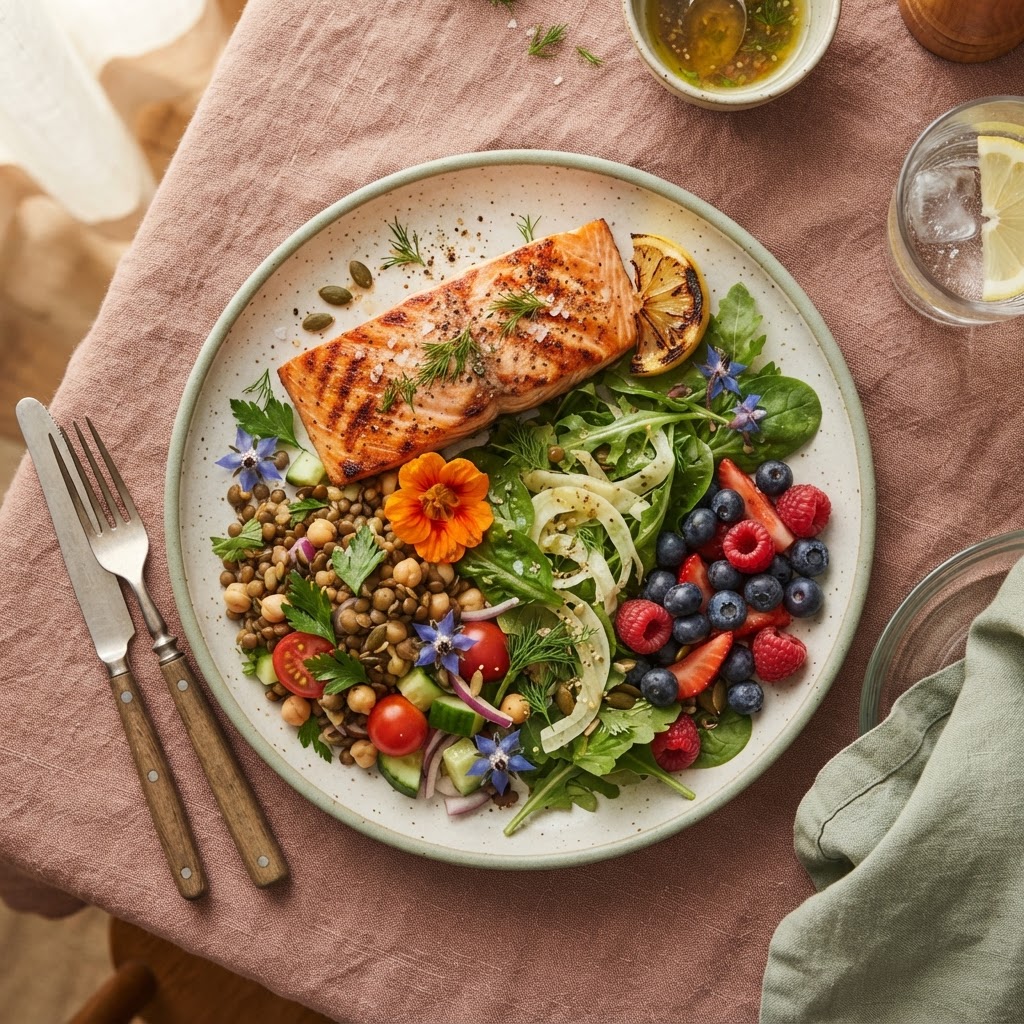
A simple way to picture most meals: a portion of protein, plenty of vegetables or fruit, some fibre-rich carbs, and a little healthy fat. That's not a rule or a prescription — it's a shape that tends to work.
Protein-rich foods
Protein is the part of the plate that does the most quiet work in midlife. It helps preserve the muscle that keeps your metabolism steady, and it keeps meals satisfying so you're not hungry again an hour later.
Good everyday sources include fish, eggs, yogurt, chicken, tofu, beans, lentils, and nuts. You don't need expensive supplements or rare ingredients — the protein sources most of us already know are exactly the ones that help.
The principle is to include a source of protein in most meals. How much exactly depends on you, and that's the kind of detail a structured plan works out properly rather than guessing.
Vegetables and fibre
Vegetables and fibre-rich foods do two things that matter in midlife: they support steady blood sugar, and they feed the gut bacteria that are increasingly linked to how the body handles oestrogen after menopause. We've written about that emerging connection in our article on the estrobolome and the gut–oestrogen link.
Aim for variety and volume here — leafy greens, cruciferous vegetables like broccoli and cabbage, legumes, whole grains, nuts and seeds, and fruit. The more colours and types, the better the fibre mix that feeds a healthy gut.
Whole, minimally processed foods
The closer a food is to how it grew, the less likely it is to send your blood sugar on a rollercoaster. A piece of fish, a bowl of lentils, a plate of roasted vegetables — these keep you steadier than their ultra-processed equivalents.
This isn't about perfection. It's about tilting the balance so most of what you eat is real food, most of the time.
Healthy fats
Fat isn't the enemy it was made out to be. The right fats — olive oil, avocados, nuts, seeds, oily fish — help meals stay satisfying and support hormone health. What's worth limiting is the combination of refined sugar and ultra-processed fats that show up together in packaged snacks and fried foods.
Hydration
It sounds too simple to mention, but thirst is often mistaken for hunger, and mild dehydration can nudge you toward snacking. Water, herbal teas, and mineral water all count. If your evening wine habit is more habit than pleasure, that's worth an honest look too — alcohol provides energy without nutrients and can disrupt the sleep that's already fragile in menopause.
What to eat less of
This is the other half of the story, and we cover it in detail in our article on foods that make menopause belly fat worse. In short: refined sugar, ultra-processed foods, and excess alcohol are the main ones to be mindful of. You don't have to eliminate anything forever — but tilting away from them most days makes a real difference.
Why this is principles, not a plan
Everything above is genuinely useful — but you'll notice it doesn't tell you what to eat on Tuesday, or how much, or in what combination. That's deliberate.
Knowing the principles is the foundation. But turning those principles into two consistent weeks of actual meals — with the right protein, the right variety, and the right rhythm — is where most women get stuck. It's not hard to understand; it's hard to do, every day, while also living your life.
That's the gap a structured programme fills. The Two Week Tummy Tuck takes these principles and turns them into a clear 14-day plan, so you can follow along instead of building every meal from scratch. If that's what you're looking for, you can learn more about the programme here.
Further reading
- Menopause Belly Fat: The Complete Guide — our pillar guide to why belly fat changes and what you can do
- Foods That Make Menopause Belly Fat Worse — what to limit and what to choose instead
- Protein and Menopause Belly Fat — why protein matters more now
- Your Gut Bacteria, Oestrogen and Menopause — the estrobolome explained
Frequently asked questions
Start your 14-day programme today
Put what you've learned into practice with a simple, effective 14-day plan designed specifically for women going through the menopause. Reduce inches from your waistline and feel more confident in just two weeks.