You're eating well. You're staying active. And yet the belly fat keeps accumulating. If this sounds familiar, there's a hormonal connection you may be missing — one that explains why so many women experience peri-menopause weight gain despite their best efforts.
It's called insulin resistance, and it's one of the most significant — yet rarely discussed — factors in menopause weight gain.
What Is Insulin Resistance?
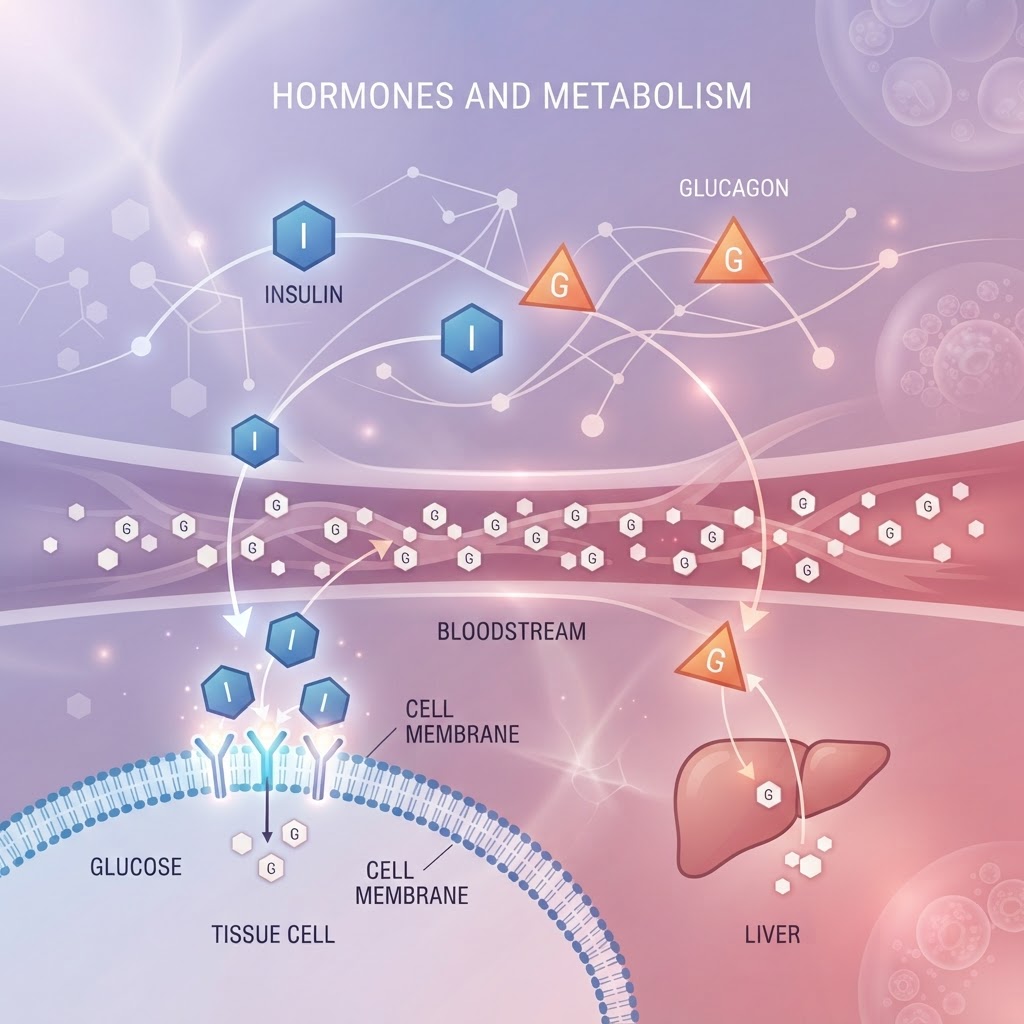
Insulin is a hormone that helps your cells absorb glucose (sugar) from your bloodstream. When you eat carbohydrates, your blood sugar rises, and your body releases insulin to move that glucose into your cells for energy.
Insulin resistance means your cells have become less responsive to insulin. Your body has to produce more and more insulin to get the same effect — and high insulin levels have a significant consequence: they signal your body to store fat, particularly around the abdomen.
When insulin is high, your body is essentially in "storage mode." It's very difficult to burn fat when insulin is elevated, regardless of how little you're eating or how much you're exercising.
Why Menopause Causes Insulin Resistance
The connection between menopause and insulin resistance comes down to one hormone: oestrogen.
Oestrogen plays a protective role in insulin sensitivity. It helps your cells respond efficiently to insulin and helps your body manage blood sugar effectively. As oestrogen declines during peri-menopause and menopause, this protection gradually disappears.
Research has shown that post-menopausal women have significantly higher rates of insulin resistance than pre-menopausal women of the same age and body composition. The hormonal change itself — not just ageing — is a major factor.
This is why many women first notice weight gain during peri-menopause, even before their periods have stopped completely. The decline in oestrogen has already begun affecting how their body handles insulin.
The Vicious Cycle
Insulin resistance creates a frustrating cycle:
- Your cells become resistant to insulin
- Your body produces more insulin to compensate
- High insulin levels promote fat storage, especially visceral fat
- Visceral fat itself worsens insulin resistance
- The cycle continues, making weight loss increasingly difficult
This is why traditional dieting approaches — which often focus on calorie restriction without addressing insulin — can be so ineffective during menopause. You can't simply "eat less" your way out of a hormonal cycle.
Signs You May Have Insulin Resistance
Insulin resistance often develops gradually, and many women don't realise they have it. Common signs include:
- Weight gain specifically around the abdomen (rather than evenly distributed)
- Difficulty losing weight despite eating less
- Cravings for sugary or carbohydrate-rich foods
- Energy crashes, particularly after meals
- Feeling hungry soon after eating
- Brain fog or difficulty concentrating
- Skin changes (such as darkened patches in skin folds)
If several of these sound familiar, insulin resistance may be playing a role in your weight gain.
Why This Changes Everything About Weight Loss
Understanding insulin resistance changes the entire approach to weight loss during menopause:
Calorie counting alone won't work. You can be in a calorie deficit and still not lose weight if your insulin is consistently high. Your body will prioritise fat storage over fat burning, regardless of how many calories you're eating.
Exercise helps but isn't the whole answer. Exercise improves insulin sensitivity, which is why it's a valuable complement to a nutrition-first approach. But without the right dietary changes, exercise alone often isn't enough to overcome the hormonal resistance.
Food choices matter more than food quantity. The types of foods you eat directly affect insulin levels. Foods that cause rapid blood sugar spikes (sugar, refined carbs) keep insulin high and perpetuate the cycle. Foods that keep blood sugar stable allow insulin to decrease, enabling your body to shift out of storage mode.
Breaking the Cycle
The encouraging news is that insulin resistance can be improved — often significantly — through dietary changes. When you consistently choose foods that keep blood sugar stable, your cells gradually become more responsive to insulin again.
This doesn't require extreme restriction. It requires choosing the right foods — ones that don't cause insulin spikes — and doing so consistently. As insulin levels decrease, your body naturally shifts from fat storage to fat burning.
This is the foundation of the non-surgical Two Week Tummy Tuck programme. Rather than focusing on calorie restriction, it focuses on food choices that address the root cause: insulin resistance. By working with your hormones rather than against them, the programme helps your body naturally shift out of fat-storage mode.
The Bottom Line
If you're gaining belly fat despite eating well, insulin resistance may be the missing piece. The hormonal changes of menopause — specifically the decline in oestrogen — directly affect how your body manages insulin, and high insulin levels promote abdominal fat storage.
Understanding this isn't about finding something else to worry about. It's about understanding why traditional approaches haven't worked — and why a different approach, one that addresses insulin rather than just calories, can make all the difference.
The key insight is this: during menopause, what you eat matters more than how much you eat. Choosing foods that support healthy insulin function is the most effective way to address menopause belly fat at its root cause.
Further reading
- Menopause Belly Fat: The Complete Guide — our pillar guide to why belly fat changes and what you can do
- Why Belly Fat Increases After Menopause — the hormonal reasons behind the shift
- Foods That Make Menopause Belly Fat Worse — what to limit and what to choose instead
- What to Eat for Menopause Belly Fat — nutrition principles that genuinely help
Frequently asked questions
Start your 14-day programme today
Put what you've learned into practice with a simple, effective 14-day plan designed specifically for women going through the menopause. Reduce inches from your waistline and feel more confident in just two weeks.