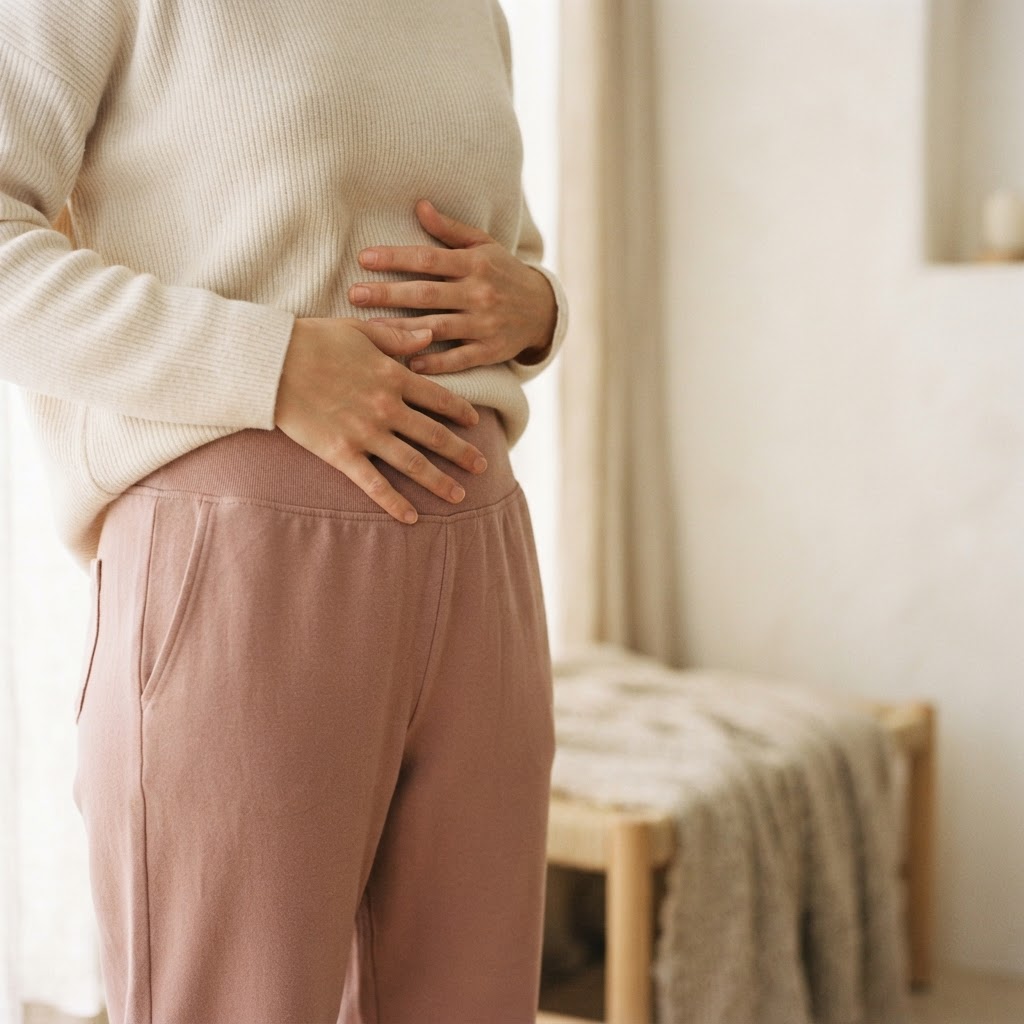
If your stomach seems to change size throughout the day — flatter in the morning, noticeably rounder by evening — you're experiencing one of the most common and frustrating symptoms of menopause. But is it bloating, or is it stubborn belly fat?
The distinction matters more than you might think. Bloating and fat are entirely different processes, and understanding which one you're dealing with determines the best way forward.
What Is Menopause Bloating?
Bloating is a temporary increase in abdominal size caused by gas, water retention, or digestive issues. It's incredibly common during menopause — in fact, digestive complaints increase significantly during this transition.
Signs it's bloating:
- Your stomach is noticeably flatter in the morning but distends as the day goes on
- The size changes from day to day, or even hour to hour
- You feel pressure, fullness, or gas
- Your clothes feel tight around the middle but loose elsewhere
- It comes with other digestive symptoms like wind, burping, or changes in bowel habits
Why menopause makes bloating worse:
Declining oestrogen affects your digestive system in several ways. It slows down digestion, alters the balance of gut bacteria, and can increase water retention. Hormonal fluctuations also affect how your body processes certain foods, making you more sensitive to things that never bothered you before.
What Is Menopause Belly Fat?
Belly fat during and after menopause is a more permanent change. It doesn't fluctuate throughout the day — it's consistent, and it tends to accumulate specifically around the middle rather than being distributed evenly.
Signs it's belly fat:
- Your stomach is the same size morning and evening
- It's consistent from day to day, not changing dramatically
- You can pinch it — it feels like tissue, not a balloon
- It's accompanied by a change in body shape (your waist has thickened)
- It doesn't improve after a bowel movement or by the next morning
The hormonal changes of menopause shift where your body stores fat. Oestrogen normally directs fat to the hips and thighs. As it declines, fat storage moves to the abdomen — specifically visceral fat, which sits deep around your organs.
Can You Have Both?
Absolutely — and most menopausal women do. You might have genuine belly fat accumulation that's then made worse by bloating on top. This is why your stomach can feel frustratingly unpredictable.
The good news is that the approach that helps one often helps the other. A nutrition plan that reduces bloating (by addressing food sensitivities and digestive health) while also targeting fat loss through the right food choices can address both simultaneously.
What Makes Bloating Worse During Menopause
Several factors can increase bloating during menopause:
- Sugary and ultra-processed foods — these feed gas-producing gut bacteria and cause blood sugar spikes
- High-salt foods — sodium increases water retention
- Carbonated drinks — they literally add gas to your system
- Eating too quickly — you swallow air and don't digest properly
- Certain carbohydrates — as your gut changes, foods that never caused issues before may suddenly bloat you
- Stress — cortisol affects digestion directly, often causing bloating and discomfort
What to Do About It
If you suspect bloating is a significant factor, keeping a simple food and symptom diary for a week can be eye-opening. Note what you eat and how your stomach feels afterwards. Patterns often emerge quickly.
For belly fat, the approach is different. The hormonal changes of menopause mean that simply eating less rarely works — your body is dealing with insulin resistance, cortisol sensitivity, and changing fat storage patterns. A targeted nutrition approach that works with your hormones, rather than against them, is far more effective.
This is exactly why the non-surgical Two Week Tummy Tuck programme focuses on nutrition as the primary driver of results. By choosing the right foods, you can reduce bloating, support healthy hormone balance, and target belly fat — all at the same time.
The Bottom Line
If your stomach changes size throughout the day, bloating is likely a factor. If it's consistent morning and night, it's more likely fat. And if it's both — which is common — a nutrition-first approach can address them together.
The most important thing is not to ignore it or write it off as "just part of getting older." The right approach, started at the right time, can make a real difference — often within the first week.
How to reduce bloating during menopause
If you've worked out that what you're experiencing is bloating rather than fat, the good news is that bloating often responds relatively quickly to simple changes — sometimes within days rather than weeks.
Eat slowly and chew properly. Much of the gas that causes bloating comes from swallowing air while eating quickly, and from food that hasn't been broken down properly before it reaches the gut. Slowing down genuinely helps.
Build meals around protein and vegetables, and be mindful of wind-producing foods. Beans, lentils, cabbage, broccoli and onions are healthy foods that some women find very bloating. You don't have to avoid them — but if you notice a pattern, eat smaller amounts or better-cooked versions.
Stay hydrated. It sounds counterintuitive, but drinking enough water reduces water retention, because the body holds onto water more aggressively when it's short of it.
Limit fizzy drinks and chewing gum. Both introduce extra air into your digestive system.
Watch the salt. High-sodium, ultra-processed meals encourage water retention, which shows up as puffiness around the middle.
Move after eating. A short walk after a meal helps food move through the gut and reduces the gas build-up that causes evening bloating.
Be honest about alcohol. Alcohol can irritate the gut lining and disrupt digestion; if your bloating is worse the morning after a drink, that's a signal worth listening to.
Consider your gut health. There's a growing understanding of the connection between gut bacteria and how the body handles oestrogen after menopause — we cover it in our article on the estrobolome and the gut–oestrogen link.
If bloating is severe, persistent, painful, or comes with other symptoms (unexplained weight loss, bleeding, a noticeable mass), it's worth speaking to a healthcare professional rather than assuming it's a normal part of menopause.
And if what you're actually carrying is stubborn belly fat rather than bloating, our complete guide to menopause belly fat is the place to start.
Further reading
- Menopause Belly Fat: The Complete Guide — our pillar guide to why belly fat changes and what you can do
- Foods That Make Menopause Belly Fat Worse — what to limit and what to choose instead
- Why the Scale Isn't Moving During Menopause — and what to track instead
Frequently asked questions
Start your 14-day programme today
Put what you've learned into practice with a simple, effective 14-day plan designed specifically for women going through the menopause. Reduce inches from your waistline and feel more confident in just two weeks.